
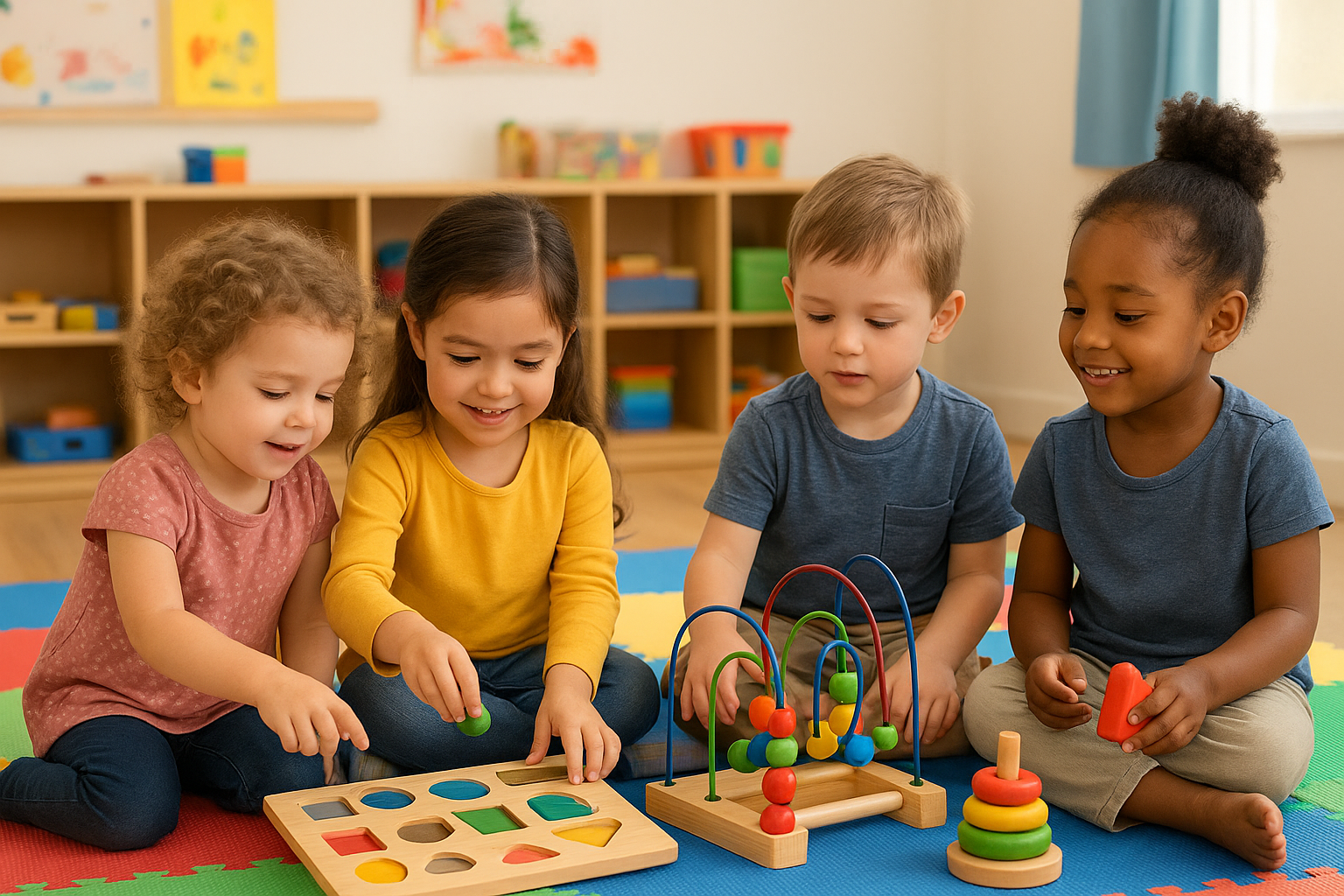
Cognitive development is one of the most important aspects of early childhood education. It includes how children think, explore, understand the world, solve problems, and develop the ability to reason. During the preschool years, a child’s brain grows at an extraordinary pace—making this the perfect stage to nurture critical thinking and curiosity.
High-quality preschools provide environments rich in experiences that support these essential skills. Let’s explore how cognitive development unfolds and why preschool plays a vital role in shaping young minds.
1. What Is Cognitive Development?
Cognitive development refers to how children acquire knowledge and skills such as:
• Thinking and reasoning
• Memory and attention
• Problem-solving
• Language comprehension
• Imagination and creativity
• Understanding cause and effect
These abilities help children make sense of the world and prepare them for more advanced learning in the future.
2. How Preschool Supports Cognitive Growth
a. Hands-On Learning Experiences
Preschool activities like puzzles, building blocks, matching games, and sensory play stimulate the brain. These activities help children understand patterns, shapes, numbers, and spatial relationships.
b. Language and Communication Activities
Storytelling, singing, circle-time discussions, and role-play games help children build vocabulary and improve comprehension. Strong language skills are the foundation of cognitive development.
c. Problem-Solving Opportunities
Children learn through exploration. When they face challenges—like figuring out how to balance blocks or share toys—they build logical reasoning and decision-making skills.
d. Encouraging Curiosity and Questions
Preschool teachers often ask open-ended questions such as “What do you think will happen next?” This encourages observation, prediction, and critical thinking.
3. Cognitive Milestones in Preschool-Aged Children
By age 3–5, children typically begin to:
• Understand basic counting and number concepts
• Recognize shapes, colors, and patterns
• Form longer sentences and express ideas clearly
• Use imagination to create stories or scenarios
• Follow multi-step instructions
• Begin understanding time concepts like “yesterday” or “later”
• Identify similarities and differences
Preschool environments help strengthen these milestones through structured and unstructured activities.
4. The Role of Play in Cognitive Development
Play is the most powerful tool for cognitive growth. Through pretend play, children learn to:
• Think symbolically
• Sequence events
• Use imagination
• Understand roles and relationships
• Develop self-regulation
Whether they are pretending to be chefs, doctors, or teachers, they are building complex thinking skills.
5. Creating a Cognitive-Rich Environment at Home
Parents can support cognitive development by:
• Reading to children daily
• Encouraging questions
• Offering open-ended toys (blocks, art supplies, puzzles)
• Allowing children to explore safely
• Limiting screen time
• Playing memory or matching games together
Consistency between home and school greatly boosts learning outcomes.
Conclusion
Cognitive development forms the building blocks of a child’s ability to learn, understand, and succeed. Preschool provides the perfect setting to strengthen thinking skills through exploration, play, language, and problem-solving. With the right support, children enter primary school confident, curious, and ready to learn.